Teacher lateness and absenteeism: measure first, then act
Without reliable data, discussions about lateness turn into disputes. Measuring fairly is the first step to improving punctuality.
GIVEITAWAY Published 1 min read
Every director knows which classes start late. Proving it, fairly and without conflict, is another matter. A good measurement system protects punctual teachers as much as it reveals problems.
Measure the same way for everyone
Paper registers and verbal reports depend on who fills them in. A terminal records every arrival with the same rule for every teacher, which makes figures easier to discuss.
Agree on grace periods
A few minutes of tolerance, known by everyone in advance, avoids penalising a teacher held up at the gate. What matters is that the rule is the same for all and written down.
Look at session coverage, not just presence
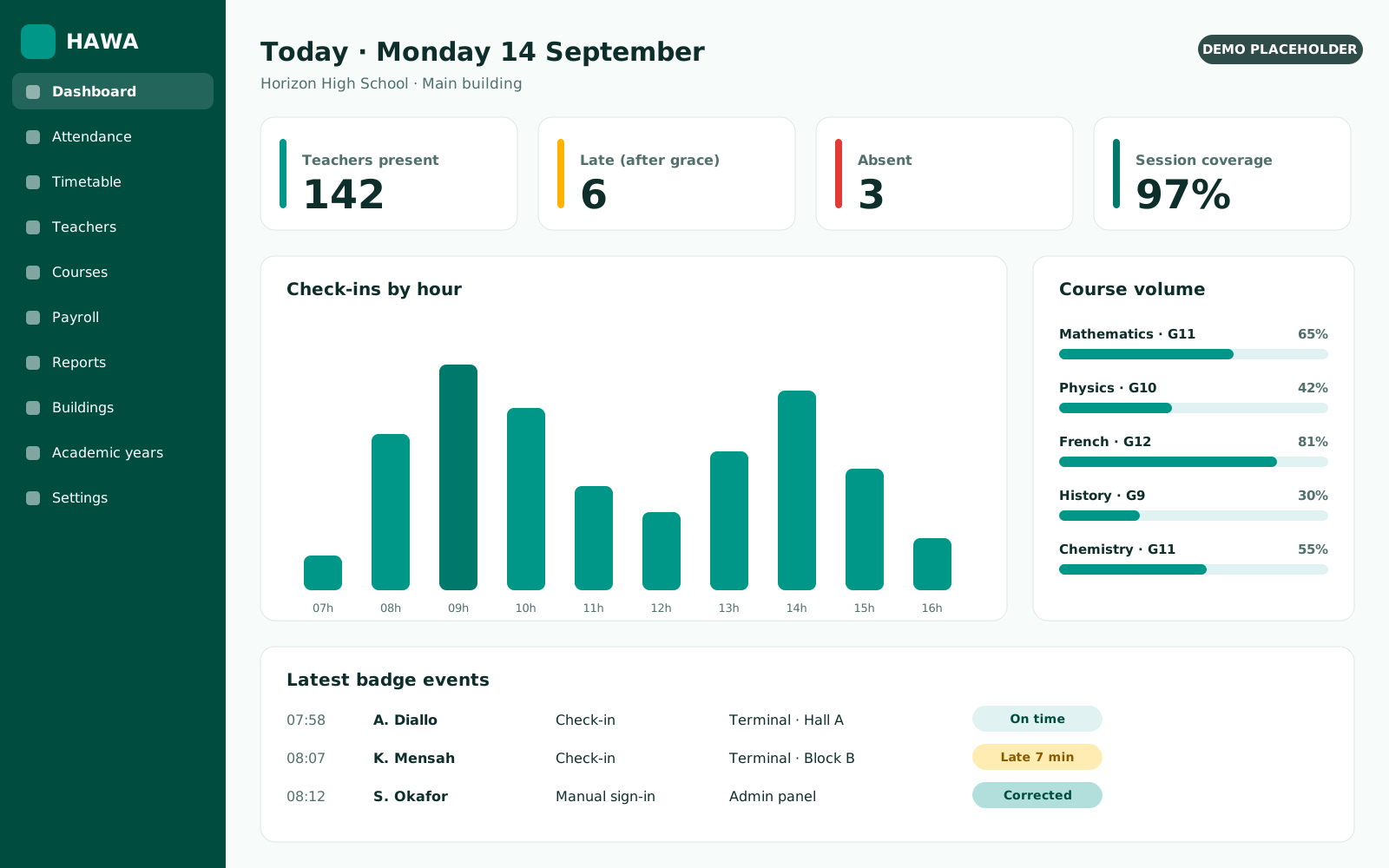
A teacher can be in the building and still start the class late or leave early. Session coverage (the share of the planned session actually taught) is a fairer indicator than presence alone.
Share the figures
Teachers who see their own hours and punctuality rarely contest them. Monthly reviews with heads of department turn figures into concrete actions: timetable adjustments, transport issues, replacements.
Act on patterns, not incidents
One late morning is an incident. Repeated late starts on the same slot often point to a timetable or transport problem that can be solved.