How to reduce student absenteeism: a practical plan
Absenteeism rarely starts suddenly. Measure it accurately, contact families early, and act on patterns before they harden.
HAWA Published Updated 1 min read
Chronic absence is one of the strongest predictors of a student dropping out — and it almost always builds gradually. Catching it early is the whole game.
Measure before you manage
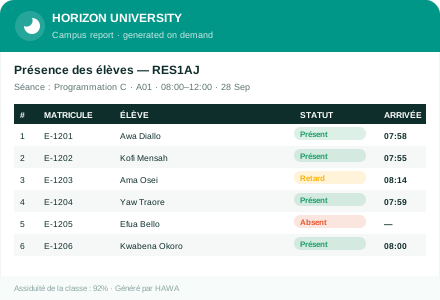
You cannot reduce what you do not count. Accurate, per-session attendance (not a once-a-day headcount) shows which students, classes and times are slipping.
Contact families within the day
A same-day message when a student is absent is the single most effective intervention. Automate it so it never depends on a busy teacher remembering.
Look for patterns, not just totals
Is a student absent every Monday morning? Only in one subject? Patterns point to the cause — transport, a difficult class, a home issue — and tell you what to fix.
Intervene in tiers
- 1–2 absences: automatic parent notification.
- A rising trend: a call from the form teacher.
- Chronic: a meeting with the family and a support plan.
Make attendance visible
Share simple attendance rates with teachers and families. Visibility alone nudges behaviour.
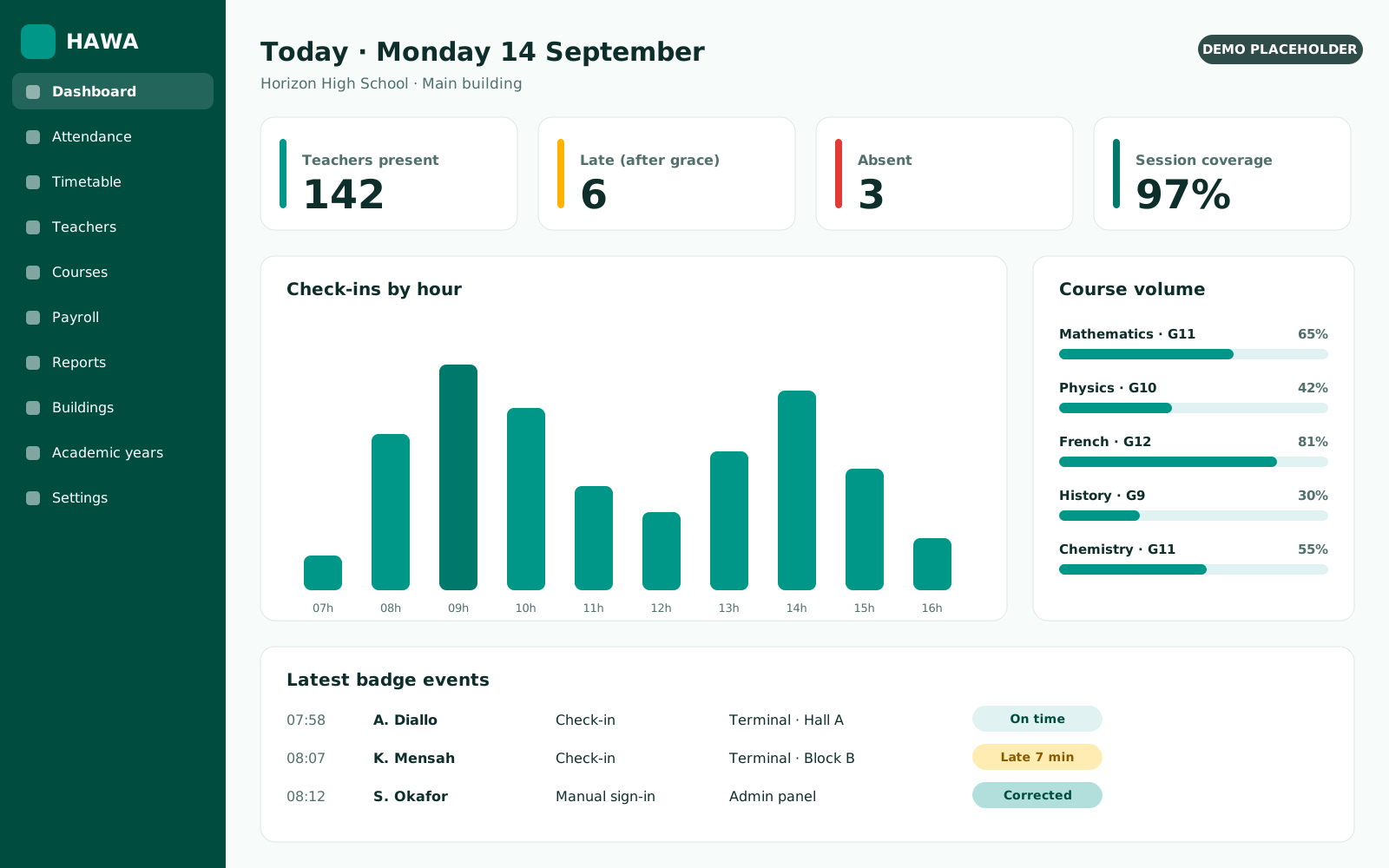
A system that measures per session and alerts families automatically does the heavy lifting, so your staff can focus on the students who need them.