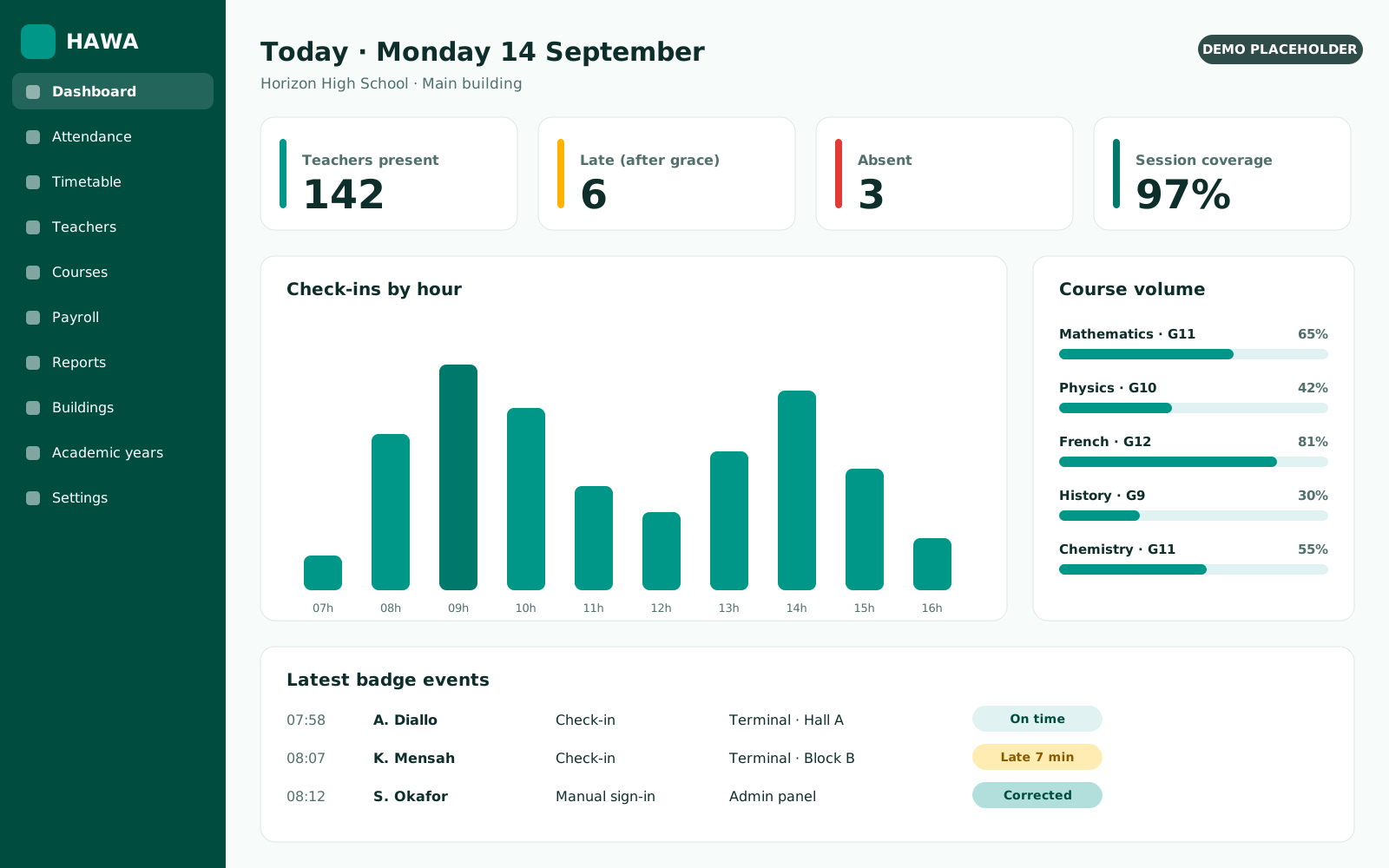
Student attendance systems: how modern schools track it
Paper registers lose data and invite fraud. Here is how schools track student attendance accurately and turn it into action.
HAWA Published Updated 1 min read
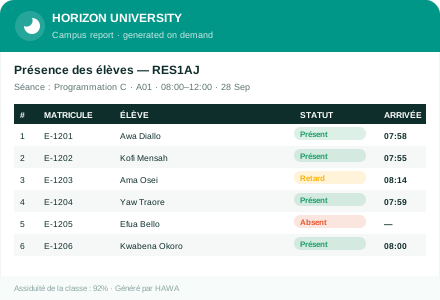
Taking attendance on paper costs teaching time, is easy to falsify, and the data rarely reaches anyone who can act on it. A student attendance system fixes all three.
1. Pick a check-in method that fits the class
- Biometric (fingerprint): a student cannot sign in for an absent friend. Best where attendance fraud is a concern. - Card or NFC: fast for large classes; pair it with photos to deter card sharing. - Teacher marks the list on a device: no hardware per student, good for small classes or fieldwork. Most schools mix methods by context.
2. Link every check-in to the timetable
Attendance data is only useful when tied to the scheduled class, room and teacher. That lets you compute an attendance rate per student and per class, and spot the sessions or subjects with the most absences.
3. Alert families the same day
The biggest driver of better attendance is fast parent contact. When a student is marked absent, an automatic SMS, WhatsApp or email to the family the same day closes the loop before a pattern forms.
4. Make the data printable and auditable
Keep printable class registers for inspections and a per-student history for parent meetings. Records that can be exported and signed protect the school in disputes.
5. Respect consent and privacy
Where biometrics are used, offer a card or PIN alternative for anyone who declines, without penalty, and store only what you need. This keeps you compliant and builds trust with families.
A good system turns attendance from a daily chore into a tool that actually reduces absenteeism.